By Richard Bell, University of Maryland
This article is adapted from the prize-winning new book, The American Revolution and the Fate of the World.
We interviewed Richard for our podcast – visit our podcast page to hear it!
Two Irish Lives, Two Sides of War
Let me begin with two Irish boys whose lives illuminate the complicated relationship between Ireland and the American Revolution.
The first was Roger Lamb, a poor Protestant from Dublin who enlisted in the British Army as a teenager. He endured brutal treatment from his officers, crossed the Atlantic, and fought for the King George throughout the war. He witnessed British defeats at Saratoga and Yorktown, was captured twice, escaped twice, and eventually returned home to Ireland, where he became a schoolteacher.
The second was Andrew Jackson, the son of poor Protestant emigrants from County Antrim who settled in the Carolina backcountry. During the Revolution he served the patriot cause as a teenage messenger, was captured by the British, and famously refused to clean a redcoat officer’s boots. The resulting sword attack left him scarred for life and deepened his hatred of British rule. Decades later, he became the seventh president of the United States.
These two Irish Protestants fought on opposite sides of the same war. Their stories remind us that Irish involvement in the Revolution was never simple. Irish people fought both for and against the British Empire, and the Revolution transformed both America and Ireland in ways that neither Roger nor Andrew could have fully imagined.
Ireland on the Eve of Revolution
On the eve of the Revolution, Ireland occupied a peculiar place within the British Empire. It was neither a colony nor a fully independent kingdom. Political power rested overwhelmingly in the hands of a Protestant Anglican elite that dominated Parliament and government. Beneath them stood a large Protestant Presbyterian population, especially in Ulster, whose political rights were decidedly limited. At the bottom were Ireland’s Catholics, who made up roughly four-fifths of the population but remained almost entirely excluded from political life.
Ireland was formally subordinate to Britain. The Dublin Parliament was supposed to legislate for Ireland, but London could always override it. British troops were also stationed in Ireland (at Irish expense), and ultimate authority rested with the King of England and his representatives. Ireland therefore existed in a state of severe dependency—Britain’s sister, but also Britain’s slave.
Irish Migration and Influence in America
By the 1770s, however, hundreds of thousands of Irish migrants and their descendants had already settled in North America. Many came from Ulster, driven by economic hardship, trade restrictions, and ever rising rents. These migrants spread across the colonial frontier, building communities that carried the names and memories of places they had left behind: Belfast (ME), Londonderry (NH), Donegal (PA), Tyrone (PA), Coleraine (PA), and Fermanagh (PA). By the time of the Revolution, roughly one in five white Americans south of New England had Irish roots.
Irish Americans and the Patriot Cause
These Irish Americans emerged as some of the Revolution’s most enthusiastic supporters. In the months before independence was formally declared, Scots-Irish communities issued public statements condemning British policies and expressing solidarity with colonial resistance. They organized relief efforts, signed declarations of opposition to British authority, and increasingly identified their own grievances with those of the wider patriot movement.
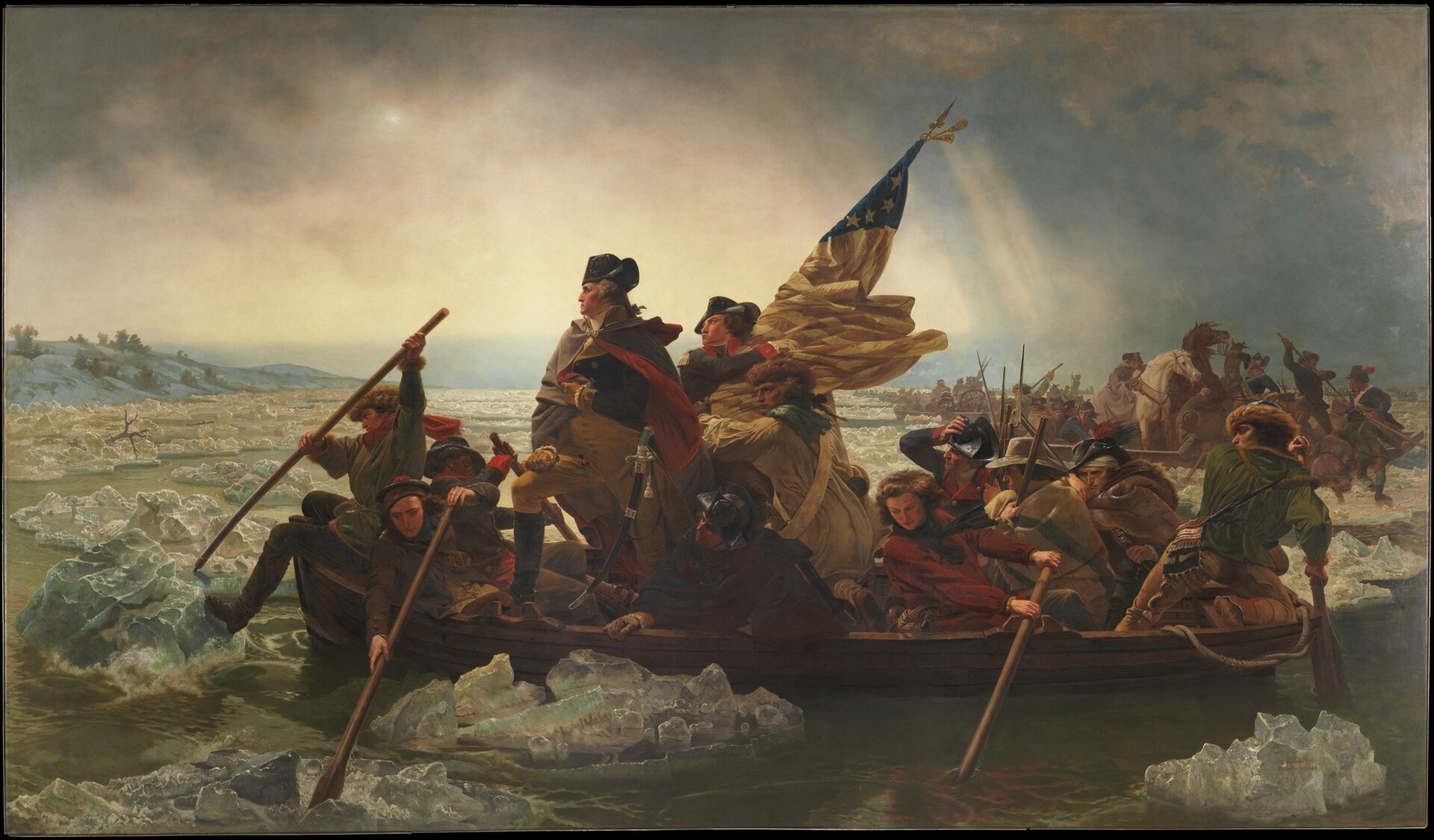
Throughout the war, Irish Americans also filled the ranks of the Continental Army in remarkable numbers. British observers frequently exaggerated their presence, sometimes claiming that half the rebel army was Irish, but there is no doubt that Irish-born migrants and their descendants constituted a substantial part of the patriot war effort. In some Pennsylvania units, Scots-Irish soldiers were so numerous that contemporaries joked the force should be called “the Line of Ireland.”
They fought for many reasons. Some were motivated by revolutionary principles. Others opposed British taxation, feared Native resistance along the frontier, sought economic opportunity, or simply needed the work. Whatever their motives, they became some of the Revolution’s most effective soldiers. Irish names appeared all over Continental muster rolls, and Irish-born (or Irish-ancestered) officers such as Richard Montgomery, Henry Knox, Anthony Wayne, and John Sullivan quickly rose to senior command positions. By war’s end, Irish Americans had secured an influential place in the new republic, and continued migration from Ireland would only deepen that influence over the next two centuries.
The Revolution’s Impact in Ireland
Yet the story did not end in America. The Revolution’s effects reverberated powerfully across the Atlantic. For many Protestants in Ireland, especially Presbyterians in Ulster, the American struggle and the patriots’ great victory demonstrated that British authority was neither permanent nor invincible. That realization transformed the politics of Irish nationalism permanently. Consider the rise of the Volunteer movement. Originally organized to defend Ireland against a possible French invasion after France entered the war in 1778, the Volunteers soon became a powerful political force. Tens of thousands of armed Protestants demanded free trade, legislative reform, and greater autonomy. Britain, weakened by the American conflict and dependent upon Irish cooperation, found itself compelled to make concessions.
Reform and Parliamentary Gains
As a result, Ireland achieved significant gains both during and immediately after the Revolution. The Volunteers efforts saw trade restrictions relaxed, the authority of the Irish Parliament expanded, and important legal disabilities imposed upon Presbyterians and Catholics reduced. As Francis Dobbs, a leader in the Volunteer movement, later observed, one thing had led to another, and “It was on the plains of America, that Ireland obtained her freedom.” By 1782, Britain had effectively granted Ireland a degree of parliamentary independence unprecedented in the eighteenth century.
Radicalization and the United Irishmen
And there would be more to come. In the 1790s, these reforming impulses merged with the radical energies unleashed by the French Revolution and the Haitian Revolution and the publication of Thomas Paine’s The Rights of Man. The United Irishmen emerged as a movement seeking to unite Catholics and Presbyterian Protestants behind the goal of Irish independence. Inspired in part by the American example, they sought to end British domination altogether.
The 1798 Rebellion
In the spring of 1798, bloody civil war for independence engulfed Ireland. Over five months of fighting, the United Irishmen used pikes and other makeshift weapons to try to beat the British army back into the sea. At the Battle of Arklow in County Wicklow on June 9, 1798, the United Irishman rushed at their enemy under a green flag emblazoned with a cross and the slogan ‘Liberty or Death.’ By June, the revolutionaries had succeeded in declaring the town of Wexford an independent republic, possessed of its own senate and its own army.
Defeat and Union with Britain
Unfortunately, their rebellion in 1798 ended very differently from the American Revolution. Unlike the Continental Congress, the United Irishmen lacked a stable national leadership. Loyalist support for Britain remained strong, and Ireland’s proximity to Britain made imperial withdrawal unthinkable. No wonder, then, that British authorities responded ruthlessly. Under the leadership of Lord Cornwallis—the same general who had surrendered at Yorktown—the rebellion was crushed. Cornwallis destroyed revolutionary strongholds and executed or imprisoned the rebellion’s leaders, while French assistance arrived too late.
In London news of the attempted rebellion in Ireland prompted calls for a crackdown. Those proposals soon solidified around an act of union, the forced merger of the kingdom of Ireland with the larger and more powerful kingdom of Great Britain. An act of union would bring an end to 250 years of Ireland’s existence as a separate kingdom, and would serve as a sign of the country’s enduring importance to Britain and to the empire writ large.
The new plan of Union became the law of the land on both sides of the Irish Sea in 1801. Thereafter, Ireland was governed by an expanded British Parliament in London. As a separate entity, Ireland no longer existed and was henceforth subsumed into a new sovereign state to be known as the United Kingdom. Accordingly, the British flag was revised to incorporate the red cross of St. Patrick, a galling, visual reminder of the failure of Irish independence.
Enduring Revolutionary Legacy
Yet the revolutionary legacy endured. The memory of the Volunteers, the example of the American patriots, and the aspirations of the United Irishmen continued to inspire later generations. Throughout the nineteenth century, Irish nationalists looked back to these decades as the beginning of a longer struggle for self-determination. That struggle ultimately culminated in the Easter Rising of 1916 and the Irish War of Independence, when most of Ireland finally achieved the sovereignty that earlier generations had sought.
A Shared Atlantic Story
The American Revolution therefore occupies a central place in Irish history as well as American history. It drew thousands of Irish men and women into a conflict that reshaped the Atlantic world. It strengthened Irish influence within the United States while simultaneously transforming political life in Ireland itself. The Revolution revealed both the possibilities and the limits of resistance to imperial power. For Americans, it created a new republic. For Ireland, it opened a long and unfinished debate about liberty, autonomy, and national independence.
Conclusion: Two Lives Revisited
The lives of Roger Lamb and Andrew Jackson capture that shared history. One fought for empire; the other fought against it. One returned to Ireland; the other rose to the presidency of the United States. Together, they remind us that the American Revolution was never merely an American story. It was also an Irish story—one whose consequences would echo across the Atlantic for generations.
This article is adapted from Richard Bell’s prize-winning new book, The American Revolution and the Fate of the World. Read more about Richard Bell.